







Choir Sight-Reading Criteria
Preface: Choir Sight-Reading Music
The choral sight-reading evaluation encourages the extension of knowledge in basic fundamentals of music and rewards the consistent use of a systematic approach to sight-reading. The level of difficulty for each grade or class will allow for the demonstration of musicality as well as for technical accuracy.
The primary purpose of the commissioned sight-reading music is to test musical literacy at specific levels. The guidelines stated for the sight-reading material provide the composer with a parameter of difficulty in composing music for each specific classification. All of the elements need not be used in each composition. Harmonic, rhythmic or textual ideas whose primary purposes are to create special effects appropriate for concert performance would best not be used in graded instructional sight-reading materials.
Other general considerations for composers are:
- Avoid using texts with unfamiliar words such as foreign or mythological terms or limericks.
- Ensure that a tonal center is evident throughout the piece.
- Return to the original key following a modulation.
- Music for treble and men’s choirs should to be of equal difficulty to that of mixed choirs in the same classification.
- Avoid introducing more than one rhythmic or harmonic problem at a time.
- Remember that it is unnecessary to employ all of the allowed elements in a single piece
Level I - Conference 1C Varsity; All MS NV & 3A/2A/1A NV
Meter


No meter change
Key:
Major keys: F, G
Texture
Homophonic, with unison passages allowed
Harmony
I, IV, and V or V7 chords
Melodic skips in the I chord: 3rds---do-mi-do; mi-sol-mi;
4th---do-sol1-do
Melodic skips in the IV chord: 3rds---fa-la-fa; do-la1-do
Melodic skips in the V chord: 3rds---ti-re-ti; sol-ti-sol
Begin on the tonic triad with voices on do-mi-sol, do-mi, or unison do.
Cadences
Authentic, half, and plagal cadences only
Rhythm
Basic patterns using whole, dotted half, half, quarter notes and a few eighth notes in pairs; avoid using rests
Length
Approximately 24 measures in 4/4, 32 measures in 3/4
Form
ABA, Regular phrase lengths of 2 or 4 measures should occur
Voicings
Mixed: SATB and SAB; Treble: SSA/SA; Tenor-Bass: TTB (Middle School) /TBB (High School) /TB
Text
Choir may use the printed text or their preferred method of reading on both readings.
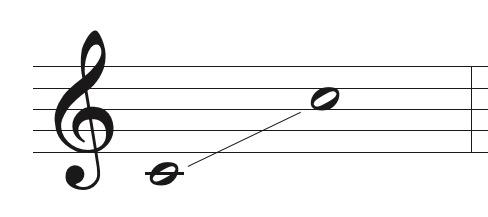
Ranges
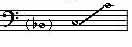
**In SAB writing the piece will allow for optional octaves for the baritone part on “sol” throughout the piece
| Sop. I | Sop. II | Alto | |
 |
 |
 |
|
| Ten. I | Ten. II / Bass I | Bass 2 | Baritone for SAB |
 |
 |
 |
 |
Level 2 - Conference 2C/3C Varsity; 4A NV
Meter
No meter changes
Key
Major keys: F, G
No modulations
Texture
Homophonic, with unison passages allowed
Harmony
I, IV, and V or V7 chords; an occasional ii, or vi chord may be used for harmonic interest
Melodic skips in the I chord: 3rds---do-mi-do; mi-sol-mi;
4th---do-sol1-do
Melodic skips in the IV chord: 3rds---fa-la-fa; do-la1-do;
4th--- do-fa-do (expected)
Melodic skips in the V chord: 3rds---ti-re-ti; sol-ti-sol; 4th---sol-re-sol
Cadences
No use of the deceptive cadence
Authentic, half, and plagal cadences only
Rhythm
Basic patterns using whole, dotted half, half, quarter notes and some eighth notes in pairs; dotted quarter note followed by an eighth on strong beats only; avoid using rests
Length
Approximately 24 measures in 4/4, 32 measures in 3/4
Form
ABA, Regular phrase lengths of 2 or 4 measures, return of A may contain slight variations
Voicings
Mixed: SATB and SAB; Treble: SSA/SA; Tenor-Bass: TTB (MS) /TBB (HS) /TB
Text
Choir may use the printed text or their preferred method of reading on both readings.
Ranges
| Sop. I | Sop. II | Alto | |
|
|
|
|
| Ten. I | Ten. II | Bass | Baritone for SAB |
|
|
|
|
Level 3 - Conference 1A/2A/3A Varsity; 5A/6A NV
Meter
No meter changes
Key
Major keys: B-flat, F, C, G, D
Texture
Homophonic, with polyphonic sections
No more than 20% polyphony
Harmony
I, IV, V or V7 chords; ii and vi chords are desirable where harmonically appropriate
Melodic skips in the I chord: 3rds---do-mi-do; mi-sol-mi
4th---do-sol1-do; 5th---do-sol-do
Melodic skips in the IV chord: 3rds---fa-la-fa; do-la1-do;
4th---do-fa-do; 5th---do-fa1-do (expected in bass lines)
Melodic skips in the V chord: 3rds---ti-re-ti; sol-ti-sol;
4th---sol-re1-sol; 5th---sol-re1-sol
Melodic skip in the V7 chord---re-fa-re (expected)
Cadences
Authentic, half, and plagal cadences only
Rhythm
Whole, dotted half, half, quarter notes, and eighth notes in pairs; a greater use of eighth notes is expected; dotted quarter note on strong beats is desired; whole, half, and quarter rests may be used
Length
Approximately 32 to 36 measures in 4/4 meter or the equivalent number of beats in 3/4 meter (42-48 measures)
Voicings
Mixed: SATB and SAB; Treble: SSA/SA; Tenor-Bass: TBB /TB
Text
Choir may use the printed text or their preferred method of reading on both readings.
Ranges
| Sop. I | Sop. II | Alto |
 |
 |
 |
| Ten. I | Baritone | Bass |
 |
 |
 |
Level 4 - Conference 4A Varsity
Meter

No meter changes
Key
Major keys: B-flat, E-flat, F, C, G, D, A
Texture
Homophonic, with polyphonic sections
No more than 20% polyphony
Harmony
I, IV, V and V7 chords allowed; ii, iii, and vi chords
Dissonance with proper resolution, but for no more than two chords in succession.
Melodic skips within the I, IV, V or V7, and vi chords are allowed (including 6ths and octaves).
Leaps of a tritone or 7th are forbidden.
Rhythm
Basic patterns using eighth, quarter, half, and whole notes and corresponding rests
Dotted values using eighths or longer values
Length
Approximately 32 measures in 4/4, 42 measures in 3/4
Voicings
Mixed: SATB and SAB; Treble: SSA/SA; Tenor-Bass: TBB/ TB
Text
Choir may use the printed text or their preferred method of reading on both readings.
Ranges
| Sop. I | Sop. II | Alto |
|
 |
|
| Ten. I | Baritone | Bass |
|
|
|
Level 5 - Conference 6A/5A Varsity
Meter
No meter changes
Key
Major keys up through four sharps and four flats
Possible modulation to relative minor keys
Texture
Homophonic, with polyphonic sections
No more than 25% polyphony
Harmony
The following altered tones, approached and left by stepwise motion, are allowed: “fi” (V/V); “si” (V/vi); “di”
(V/ii); and “te” (V7/IV). Other altered tones, i.e. “ri” with “fi” (V/iii) are allowed, but discouraged.
Leaps Tritones and sevenths are forbidden.
Dissonance is acceptable, with proper resolution.
Rhythm
Simple syncopation and ties across barlines.
Dotted patterns, including an occasional dotted eighth and sixteenth
Other sixteenth note patterns and triplets are forbidden.
Length
Approximately 32-36 measures for 5A with an authentic cadence, addition 12-16 measures for 6A
Voicings
Mixed: SAB and SATB; Treble: SSA/SA; Tenor-Bass: TBB/TB
Text
Choir may use the printed text or their preferred method of reading on both readings.
Ranges
| Sop. I | Sop. II | Alto |
 |
 |
|
| Ten. I | Baritone | Bass |
 |
|
 |